Category Archives: Types of Photographs

1918 Polar Bear Expedition American infantry soldiers in Russia [updated]

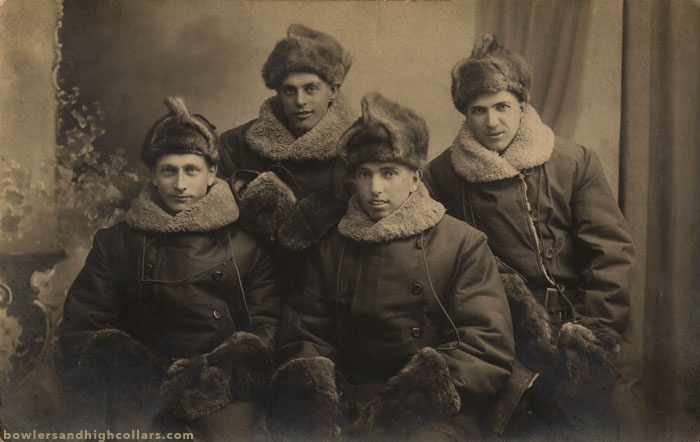
Americans in Russia. RPPC. Private Collection.

Polar Bear Expedition Americans in Russia. RPPC. Private Collection.

Updates in italic bold.

Top row: McAver, Krueger

Bottom row: Johnson and ‘Tom’.

With their mix of names, I think these four were Americans. Per the conversation below there’s a good chance these four were of the ‘Polar Bear Expedition’, American infantry soldiers of the 339th Regiment fighting the Bolsheviki in 1918. 

The wires on the front of the man to the left (Johnson) are probably to hold a backpack in place. They were in a studio but it isn’t hard to imagine the piles of snow outside.
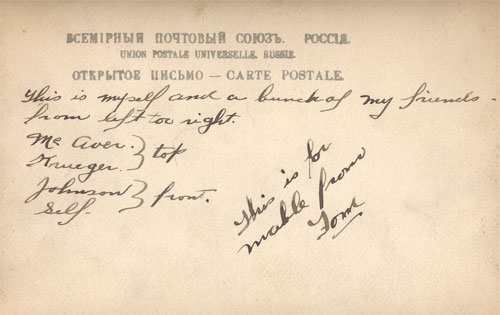
Back of RPPC.

Universal Postal Union of Russia.

Interesting also that the only translation on the back is in French. I’ve tried to date this postcard but with no luck. There just aren’t too many from Russia floating around that I’ve seen. My guess is this was taken anywhere between 1910-1920.

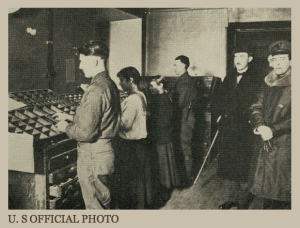
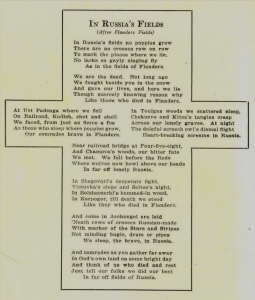
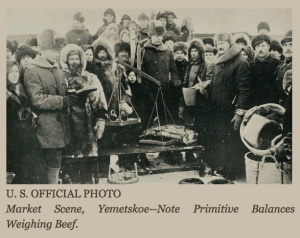
Here are a few pictures of the soldiers from the book “The History of the American Expedition Fighting the Bolsheviki”, by Joel R. Moore and Harry H. Mead and Lewis E. Jahns. Thank you Mrbflaneur for pointing me in that direction!

The Purple Kiss

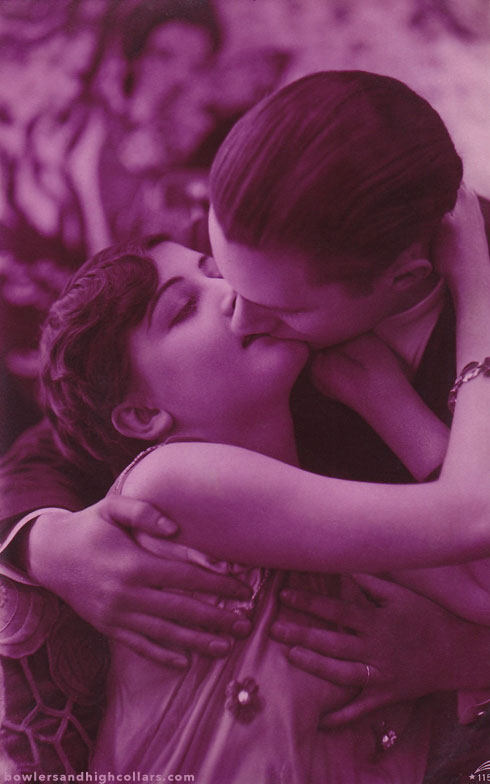
1920s Postcard. Private Collection.

1920s Postcard. Private Collection.

Another tinted French postcard of a beautiful couple kissing. Can’t get enough of these! He’s got a well placed hand too, doesn’t he?


Mr. I Look Quite All right in a Fedora

Cabinet photo. Private Collection.

Cabinet photo. Private Collection.

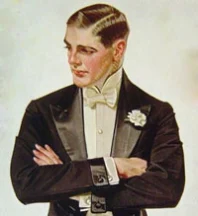
This stylish 1930s-40s gentleman with the piercing stare must have left a long trail of admirers in his path. And that is why he’s in my collection. He’d look good without the fedora on, but the hat adds that something extra.

My first star crush was Harrison Ford as Indiana Jones. I’ve been appreciative of the hat ever since. ;)

Photographer: Benjamin. La Moure. North Dakota.


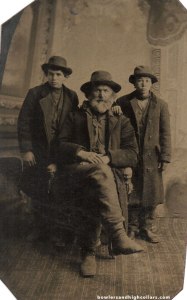
The rugged old father and his two sons

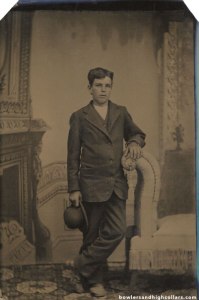
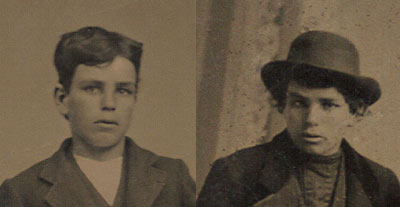
I got these two tintypes from the same place. I didn’t notice when I got them, but the boy on the second one looks like he could be the same one as on the first.

What do you think? He has the same short nose, downward curled lips and dark eyes. The chin is different but it could be the way he’s posing. He also likes his bowlers.

The same boy?

The same boy ?

I like the way they’re posing with their hands on their father’s shoulders. He had them late in life it seems, or -less likely- he was their grandfather. Isn’t he a character too with his rugged looks and bushy beard? Right out of a Gold Rush story.

These tintypes give me this feeling this was taken in a rural area, a smaller town somewhere in the plains or mountains of the American west or northwest. They are dressed well, but decidedly adapted to the country life.
On the second tintype the boy is dressed up without a collar or tie (leave those uncomfortable accoutrements to the city boys!), and his shoes are dusty. There is something on them, some kind of flap, perhaps to protect from backsplash while riding a horse or wagon.

On the first tintype, the younger brother looks like he’s wearing some type of low hanging striped apron over the trousers. Maybe this served the same purpose.

Also, while the two backdrops are different they look like they were painted by the same artist.


The Short Tails gang

The Short Tails gang by Jacob Riis. 1887

The Short Tails gang by Jacob Riis. 1887

The only known photo of the Short Tails gang that roamed the Lower East side of Manhattan in the 1880s-1890s. This picture was taken under a pier by the East River at Corlears Hook (a notoriously bad spot known for their brothels).

The Short Tails were drinkers, brawlers, and generally the worst kind of bad boys honest New Yorkers had the bad luck of running into. They were known to push loaded wagons into the river and turning around to ask the owner for a reward if they saved the contents.

They were also known to pirate boats. Then of course they’d spend all their ill-gotten dough at the local saloons like the upstanding citizens they were. They numbered around at least 50 or more, often partying in large groups on the streets late at night. Because of their ‘achievements’, their precinct had to employ twice as many cops.

They’re thought to have disbanded in the 1900s, members joining either the Five Points gang led by John Kelly west of the Bowery, or the Monk Eastman one east of it.

Here they’re seen drinking. Notice the mountain of discarded large tins (growlers) they used to carry beer.