Category Archives: RPPCs

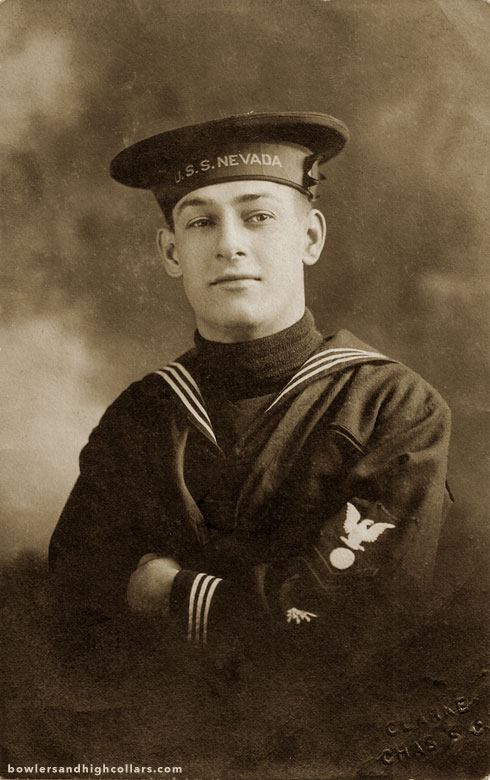
U.S.S.Nevada sailor Robert Flowers

rppc-uss-nevada-sailor-bob-flowers

U.S.S. Nevada sailor Robert “Bob” Flowers. RPPC. 1910’s-20’s. Private Collection.

The U.S.S Nevada was launched in 1914. This sailor with an air of confidence may have been one of the first to have manned it.

During the Great War the ship was based in Bantry Bay, Ireland, to protect the supply convoys sailing to and from Great Britain.

RPPC: CYKO. 1904-1920s.


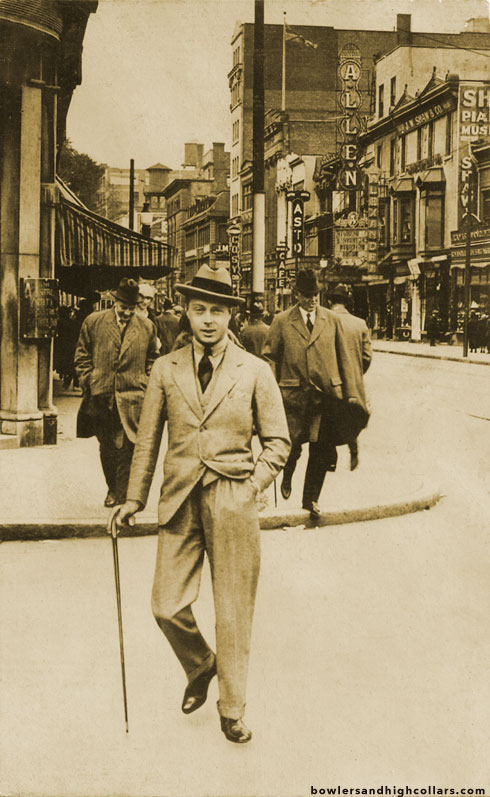
Edward, Prince of Wales, on a Montreal street. Or is it?

rppc-montreal

Edward, Prince of Wales photomontage. RPPC. Private Collection.

When I got this photo postcard I was excited about two things; it combines early 20’s men’s fashion with a beautiful street view of Montreal. I had no idea who the man was, although he looked vaguely familiar.

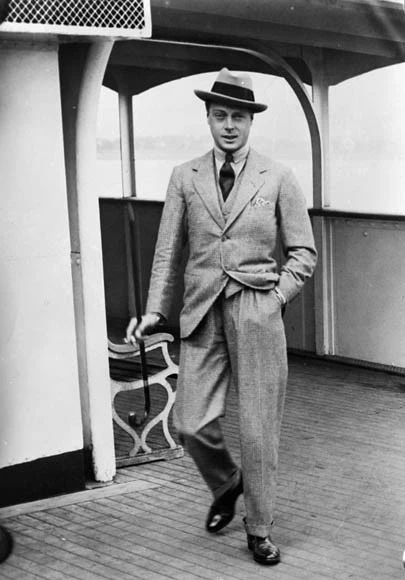
But when I posted it here, Kate of the Photobooth Journal, mentioned his uncanny resemblance to King Edward VIII…Well, yes, it happens to be a photo of King Edward VIII! At least from when he was Prince of Wales, and…it is a photomontage!

The Prince of Wales did spend a few years in Canada in the early 20’s, but he did not pose for this street candid!

Here’s the original of the Prince on a boat. I was shocked, and then I laughed. I got duped by an early 1920’s “photoshop”! They even changed his cane’s position! Still a beautiful, expertly done photograph. I’m impressed.


edward-exact

Source: kingedwardviii.tumblr.com


rppc-montreal-back

You can also see the sign for the Allen Theater, once at 698 St. Catherine West (now a less grand Five Guys burger joint). The Allen was bought and renamed The Palace in 1922. St. Catherine West was a hub of movie-going and nighttime entertainment.

Restored image © Caroline E. Ryan

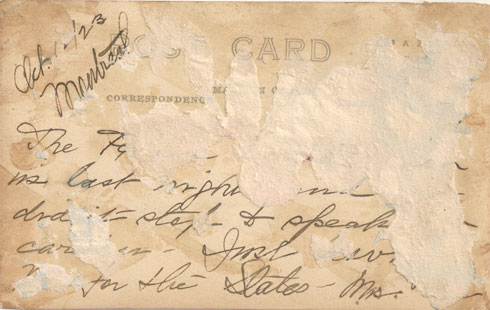
RPPC: AZO squares 1926-1940s. (Data from Playle.com, but this shows AZO squares were available in 1923)


Shaking big brother’s hand on Easter 1937

RPPC. Private Collection.

Easter 1937. RPPC. Private Collection.

A cute RPPC of a little boy shaking his older brother’s hand on Easter day of 1937. The pose is unusual, with the steps as a prop, but it is a fun concept.

RPPC: AZO squares 1926-1940s


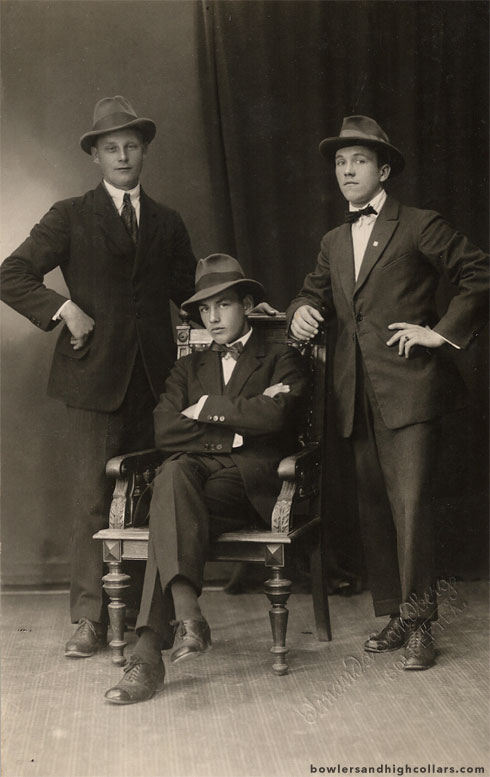
This Swedish Trio

RPPC. c.1920. Private Collection.

RPPC. c.1920. Private Collection.

A beautiful Swedish photo studio portrait of three handsome friends taken anytime from the mid 10’s to the mid 20’s. All three are sporting different types of fedoras too. The one with his arms crossed has an attitude to go with the low brimmed hat. Attitude seems to be a theme of its own in this collection. :)

Photographer: (?)manda Sandberg. Sollefteå, Sweden.


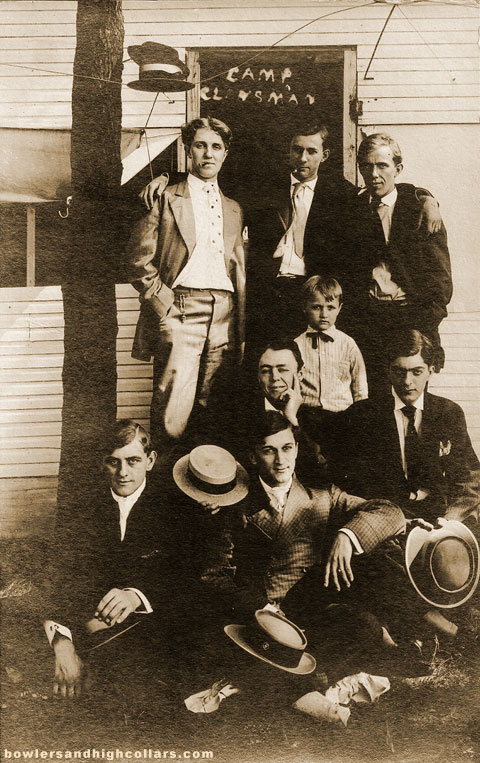
The men of Camp Clansman (yes, it is exactly what you think it is…)

RPPC. Private Collection.

RPPC. Private Collection.

I love everything about this real photo postcard, such a lovely photo; the great composition, the dapper subjects, the details like the hats on the wire, the white polka dot tie…but then there is the sign on the door like an elephant in the room.  Camp Clansman? I’ll go ahead and strongly assume this is a photo of Ku Klux Klan members showing their faces too…

I wondered if I should post it as is, or go ahead and avoid the controversy by digitally erasing the door sign. This picture has been in my collection for many months and I finally decided to post it as is.

Why doctor the past to extract the good and hide the ugly? And as such…

This particular image is a Velox taken between 1907-1914.

Some facts about the second emerging of the KKK:

The KKK of the 1910s-1920s was the second incarnation of the group first emerged in the 1860s. While the Southern chapters still focused on racism against blacks, the Northern and Midwestern ones were fueled by the liberalisation of society, mounting integration and increasing tensions between established whites and Eastern European/Jew immigrants and southerners (black and white) moving into the cities and competing for jobs.

Members of the South were patriarchal staunch anti-Catholic protestants, but all -North or South- were prohibitionists. Violent incidents were frequent between bootleggers and KKK members. The movement reached its peak in the Twenties. Some estimates put the membership total at the time to about 8 million members. In Indiana alone 40% of men were members and the group elected a governor. The manufacturing city of Detroit counted an astonishing 40,000 members within the city limits.

Not surprisingly, the turnover was high when people realized they didn’t agree with the extreme views of the group, and by the end of the second decade the KKK lost most of its members, and consequently -and thankfully- its voting power.
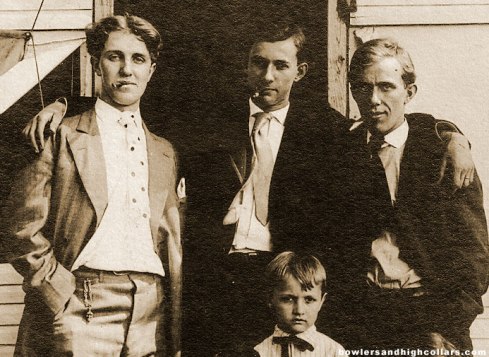
The charm hanging off his pants pocket looks unsettling...a skull?

The charm hanging off this man’s pants pocket looks unsettling…a skull? 
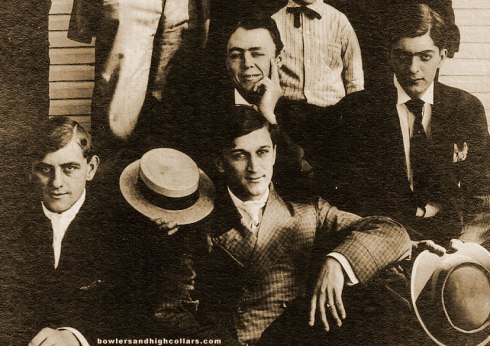
Well dressed group.

(Click for larger image)

While some in my category of “Bad Boys” are jokingly there because they look the part, these men looked respectable, even upper class, and still they were motivated by hate…This is where the true danger is. For the boy’s sake I hope the gentlemen on the photo finally woke up and left the group too.

As a side note, I think these were men of one family. Many seem to share similar physical traits.

RPPC: VELOX diamonds 1907-1914